Advanced Cardiology Masterclass
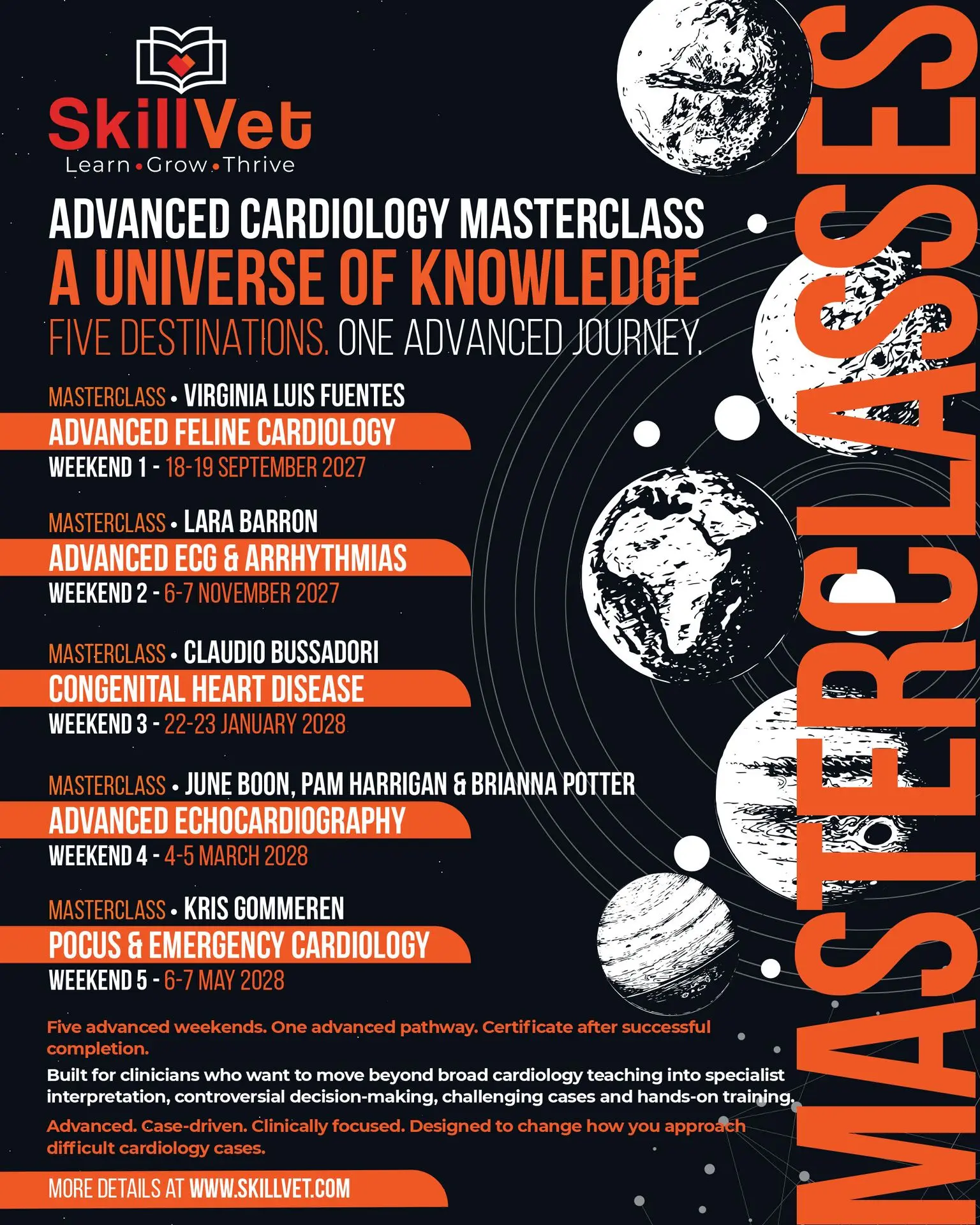
Five specialist weekends. One advanced pathway.


Five specialist weekends. One advanced pathway.
The Advanced Cardiology Masterclass is built for clinicians who want to move beyond broad cardiology teaching into specialist interpretation, controversial decision-making, advanced cases, and hands-on training. European certificate after successful completion.
Key facts
September 2027 to May 2028 · Five weekends, in person, in Florence, Bucharest, Tallinn, Thessaloniki, and Cluj-Napoca · Advanced feline cardiology, ECG and arrhythmias, congenital heart disease, advanced echocardiography, POCUS and emergency cardiology · European certificate after all five weekends and the final examination · €5,900 early bird, €6,400 standard (all taxes included) · Weekends 1–3 also available individually at €900
Program at a glance

Weekend 1: Advanced Feline Cardiology
Advanced Feline Cardiomyopathy & Echocardiography; Controversial Therapies & Difficult Clinical Decisions
September 18–19, 2027 — Florence, Italy — Prof. Virginia Luis Fuentes.
HCM beyond the basics, non-HCM cardiomyopathies, advanced feline echocardiography and its pitfalls, then controversial therapies and the difficult feline patient.
Advanced level · No practical sessions. Also available individually at €900 (all taxes included).

Weekend 2: Advanced ECG & Arrhythmias
Bradyarrhythmias & Supraventricular Tachycardia; Complex Tachyarrhythmias & Emergencies
November 6–7, 2027 — Bucharest, Romania — Dr. Lara Barron
An ECG refresher for the advanced clinician, bradyarrhythmias, supraventricular tachycardia, broad-QRS tachycardia, ventricular arrhythmias, and an arrhythmia emergency case challenge.
Advanced level · Strong case emphasis. Also available individually at €900 (all taxes included).

Weekend 3: Congenital Heart Disease
Obstructive Congenital Disease; Shunts, Complex Defects & Cases
January 22–23, 2028 — Tallinn, Estonia — Claudio Bussadori
A congenital cardiology refresher, pulmonic and subaortic/aortic stenosis, patent ductus arteriosus, other shunts, complex defects, and congenital grand rounds.
Advanced level · Anatomy, hemodynamics, prognosis, and decision-making. Also available individually at €900 (all taxes included).
Weekend 4: Advanced Echocardiography
Echocardiography Guidelines & Optimizing the Examination; Fine-Tuning Feline Echocardiography
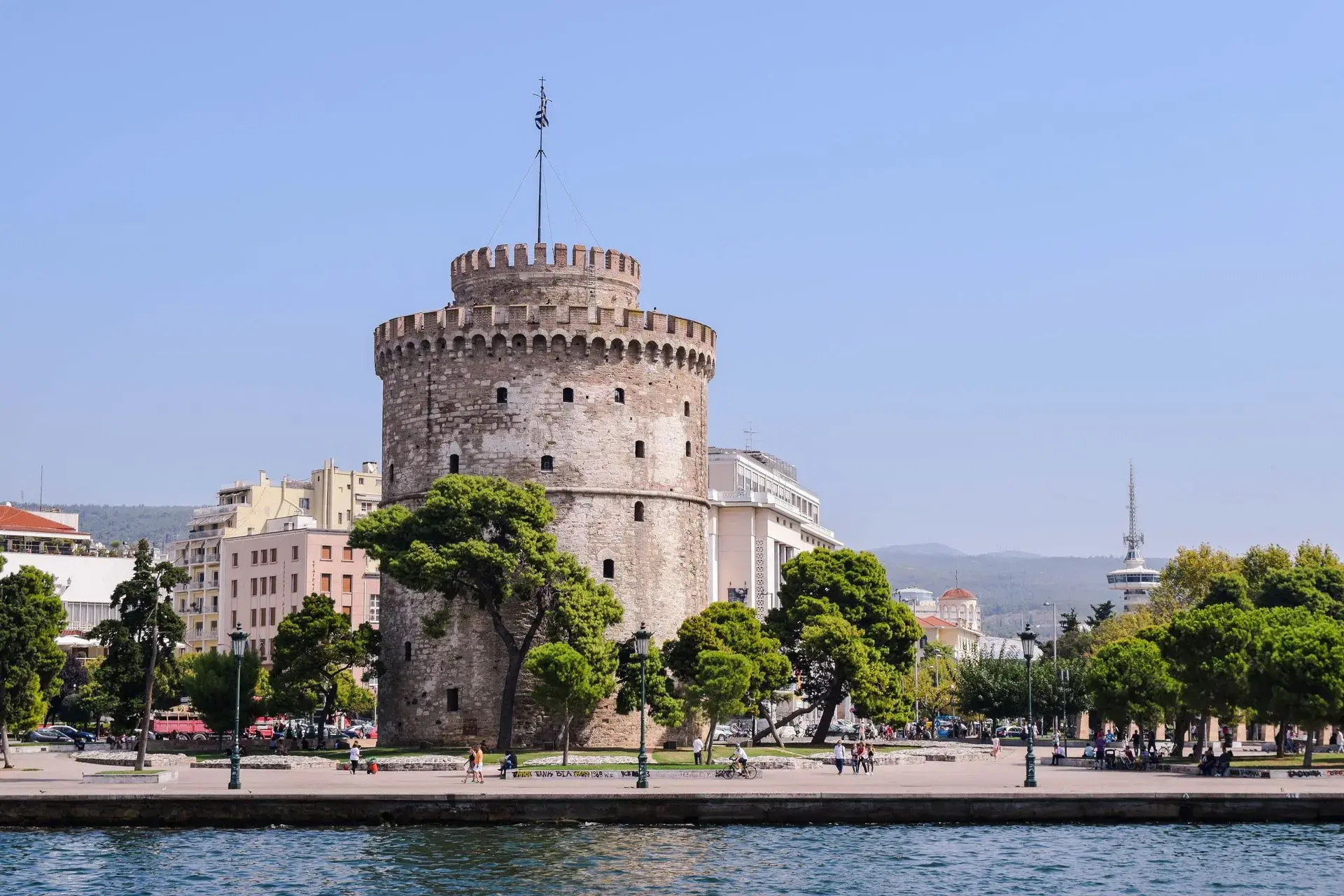
March 4–5, 2028 — Thessaloniki, Greece — June Boon, Pamela Harrigan & Dr. Brianna Potter
Current echocardiography recommendations and a consistent, clinically useful examination on Saturday; fine-tuning feline measurements on Sunday. Each day combines theory and practical echocardiography in split groups.
Split groups, final examination, practical sessions, and case discussions · Available only as part of the full program.

Weekend 5: POCUS & Emergency Cardiology
POCUS in the Emergency Patient; Final Examination & Clinical Integration
May 6–7, 2028 — Cluj-Napoca, Romania — Dr. Kris Gommeren
Emergency POCUS for the dyspneic and hypotensive patient on Saturday; the final Masterclass examination, an emergency POCUS practical, and advanced case discussions on Sunday.
Split groups, final examination, practical sessions, and case discussions · Available only as part of the full program.
Course description
Where does HCM end and a phenocopy begin? Is the broad-QRS tachycardia VT or SVT? Why is not every PDA simple? What should an echocardiogram actually measure? And in the unstable patient, fluids or no fluids?
The Advanced Cardiology Masterclass is a five-weekend advanced pathway that runs from September 2027 to May 2028. It moves from complex feline cardiology and arrhythmias to congenital disease, advanced echocardiography, and emergency POCUS. The program is intentionally narrower and deeper than the Basic Cardiology Course and the stand-alone clinical weekends, with specialist controversies, high-level case interpretation, and dedicated practical training in the later weekends.
It is not designed as five isolated teaching weekends. Between weekends, participants complete tests, clinical tasks, and homework, submit cases, and can arrange one-to-one mentorship sessions with Dr. Laurent Locquet. The program ends with a final examination in Weekend 5, and participants who attend all five weekends and pass it receive a European certificate.
Teaching philosophy
Each weekend of the Masterclass is led by a specialist in the topic and built around the questions that make advanced cardiology difficult: diagnostic boundaries that are hard to draw, therapies where the evidence has gaps, and decisions that cannot wait. Weekends 1 to 3 open with a short refresher of the fundamentals and then move quickly into advanced interpretation and decision-making.
Cases carry much of the teaching: case-based interpretation of feline echocardiography, an arrhythmia case challenge, congenital grand rounds, and advanced case discussions that ask what you would actually do next.
Practical training comes in the last two weekends: echocardiography in Weekend 4 and emergency POCUS in Weekend 5. Delegates are split into two groups, so every full-program participant completes the same theory and practical content.
Throughout the program, the focus is on what is established, what is emerging, and where evidence gaps remain, so that specialist content turns into clinical reasoning you can use on difficult cases.
Educational objectives
By the end of the full program, participants will be able to:
Weekend 1: Advanced Feline Cardiology
- Refine the diagnostic approach to HCM and distinguish it from important phenocopies and non-HCM cardiomyopathies
- Use advanced echocardiographic measurements selectively and understand their limitations
- Identify common and subtle causes of error in feline echocardiographic interpretation
- Critically discuss emerging and controversial pharmacological strategies, including rapamycin, cardiac myosin inhibitors, and pimobendan
- Apply contemporary antithrombotic and heart-failure principles to complex feline cases
Weekend 2: Advanced ECG & Arrhythmias
- Interpret complex ECGs using a structured advanced approach
- Diagnose and formulate management plans for clinically important bradyarrhythmias
- Differentiate common mechanisms of supraventricular tachycardia and select appropriate acute and chronic treatment strategies
- Approach broad-QRS tachycardia systematically and distinguish VT from supraventricular rhythms with aberrancy where possible
- Make rapid management decisions in arrhythmia emergencies and justify treatment choices in controversial cases
Weekend 3: Congenital Heart Disease
- Use anatomy and hemodynamics to interpret complex congenital heart disease
- Characterize pulmonic stenosis beyond simple type A/type B classification and recognize factors that alter intervention strategy
- Assess obstructive lesions and congenital shunts using Doppler and chamber-remodeling information
- Integrate prognosis and intervention options into disease-specific decision-making
- Recognize complex and combined congenital defects and construct a rational diagnostic plan
Weekend 4: Advanced Echocardiography
- Apply current echocardiography recommendations to a consistent, clinically useful examination
- Improve image quality, Doppler alignment, and measurement reproducibility through deliberate acquisition techniques
- Identify sources of measurement error that compromise serial comparison
- Fine-tune feline measurements including left atrial size, wall thickness, and advanced functional parameters
- Distinguish true feline cardiac pathology from technical artifact and normal biological variation
Weekend 5: POCUS & Emergency Cardiology
- Use focused ultrasound to rapidly assess dyspnea and distinguish major cardiac from respiratory/pleural causes
- Assess hypotension, hypovolemia, filling, and overall volume status in an emergency setting
- Integrate lung, pleural, cardiac, and venous findings into immediate treatment decisions
- Perform focused emergency POCUS efficiently in an unstable patient
- Demonstrate integrated Masterclass-level clinical reasoning in the final examination and case discussions
Between-weekend mentorship and tasks
The Masterclass is not designed as five isolated teaching weekends. The aim is to keep the momentum going throughout the entire program.
Between weekends, full-program participants receive tests, clinical tasks, and homework. They can also submit cases and arrange one-to-one mentorship sessions with Dr. Laurent Locquet, SkillVet's Course Master and Scientific Director.
This gives you space to work on your individual questions, cases from your own practice, and any areas where you would like additional guidance.
The between-weekend tests, tasks, and mentorship sessions are part of the full five-weekend program. They are not included when a weekend is booked individually.
Evaluation and certification
The Masterclass includes a final examination, held on Sunday morning of Weekend 5 (May 7, 2028, 9:00–12:00).
The Masterclass is completed only by attending all five weekends. The European certificate is awarded only after completion of all five weekends and a pass in the final examination.
Participants who book Weekend 1, 2, or 3 individually receive a certificate of attendance for that weekend. Attending a weekend individually does not constitute completion of the Masterclass.
The certificate reflects completion of a structured continuing education program; it does not imply specialist status or board certification.
Instructional methods
The Masterclass combines several instructional methods, because advanced cardiology requires specialist knowledge, interpretation, practical skill, and clinical judgment.
Weekends 1 to 3 are advanced theory and cases, with no practical sessions: advanced feline cardiology, with an emphasis on difficult decisions; advanced ECG and arrhythmias, with a strong emphasis on cases; and congenital heart disease, taught through anatomy, hemodynamics, prognosis, and decision-making.
Weekends 4 and 5 add practical training. On both days of Weekend 4, and on Saturday of Weekend 5, delegates are split into two groups: one starts with theory while the other starts with practical echocardiography or emergency POCUS, and the groups switch after lunch. On Sunday of Weekend 5, the final examination is followed by an emergency POCUS practical session and an advanced case discussion, which the two groups take in alternating order.
Between weekends, tests, clinical tasks, homework, case submissions, and one-to-one mentorship sessions keep the work going.
SkillVet is independent and vendor-neutral. This program does not depend on any specific ECG device, ultrasound machine, software platform, or commercial product. No manufacturer sponsorship determines the curriculum.
Faculty
Prof. Virginia Luis Fuentes
Weekend 1: Advanced Feline Cardiology
Professor of Veterinary Cardiology, Royal Veterinary College
Weekend 1 is taught by a Professor of Veterinary Cardiology at the Royal Veterinary College who has chaired the ECVIM-CA Cardiology Specialty and the ACVIM Feline Cardiomyopathy Consensus Statement group.
Virginia graduated from Cambridge and worked in general practice for 5 years before becoming a Lecturer at the Royal (Dick) School of Veterinary Studies in Edinburgh. She then moved to the USA as an Assistant Professor at the University of Missouri-Columbia, and then the Ohio State University. She joined the Royal Veterinary College in 2004, where she is a Professor of Veterinary Cardiology.
She has been Chair of the ECVIM-CA Cardiology Specialty and Chair of the ACVIM Feline Cardiomyopathy Consensus Statement group, and is currently co-chair of the American Society of Echocardiography writing group for small animal guidelines on echocardiography.
Dr. Lara Barron, DVM, MSc
Weekend 2: Advanced ECG & Arrhythmias
Lecturer, Cardiology Service, Royal Veterinary College
Weekend 2 is taught by a cardiologist trained at North Carolina State University who is now a lecturer in the Cardiology Service at the Royal Veterinary College.
Lara received a Bachelor of Science from the University of Michigan in 2006. Following her undergraduate education, she relocated to Germany, where she received a Master of Science in Molecular Medicine from the Charité Universitätsmedizin Berlin and worked in molecular virology abroad and upon her return to the United States. She received her Doctor of Veterinary Medicine from Colorado State University and completed a Rotating Internship in Small Animal Medicine and Surgery at the Animal Medical Center in New York City the following year.
She went on to complete a three-year Residency in Cardiology at North Carolina State University. After moving to the UK, she joined the Cardiology Service at the Royal Veterinary College in support of the cardiothoracic bypass program before becoming the Head of Cardiology at a private specialist hospital. She has since returned to the Royal Veterinary College in a lecturer role in the Cardiology Service.
Dr. Claudio Bussadori, DVM, MD, PhD, Dipl. ECVIM (Cardiology)
Weekend 3: Congenital Heart Disease
European Specialist in Veterinary Cardiology • Director, Clinica Veterinaria Gran Sasso, Milan
Weekend 3 is taught by a cardiologist who directs an ECVIM residency program in cardiology and whose research centers on congenital heart disease.
Claudio is a Diplomate of the European College of Veterinary Internal Medicine (Cardiology) and a European Specialist in Veterinary Cardiology. He is also a medical doctor specialized in cardiovascular diseases, with a PhD in cardiovascular pathophysiology. He holds a National Scientific Qualification (2016) as full professor in Veterinary Internal Medicine and Pharmacology. He is Director of the Clinica Veterinaria Gran Sasso in Milan, Italy, where he also directs an ECVIM residency program in cardiology, and President of the Committee for cardiovascular diseases of the Fondazione Salute Animale (FSA), the Foundation of Animal Healthcare dedicated to cardiac breed screening.
His research covers the diagnosis, epidemiology, and interventional treatment of congenital heart disease in dogs; echocardiography and pathophysiology of congenital cardiac disease in humans; the application of new echocardiographic technologies (2D strain and 3D echocardiography) in human and veterinary cardiology; and the phylogeny of the cardiovascular system.
He has published 230 papers in medical and veterinary journals, including original articles and book chapters. He is the editor of Textbook of Cardiovascular Medicine in Dogs and Cats (Edra Publishing, 2023) and co-author of Clinical Echocardiography of the Dog and Cat (Elsevier, 2015).
Weekend 4 brings together three educators: an author of foundational veterinary echocardiography texts, a past president of the International Veterinary Ultrasound Society, and a cardiology specialist from Colorado State University whose interests include advanced cardiac imaging.
June Boon, MS
Weekend 4: Advanced Echocardiography
Honorary Diplomate ACVIM (Cardiology) • Emeritus Clinical Instructor, Colorado State University
June Boon has been teaching veterinary echocardiography since 1980. She is the author of Veterinary Echocardiography, Two Dimensional and M-Mode Echocardiography for the Small Animal Practitioner, and Doppler Echocardiography for the Small Animal Practitioner: the foundational texts that shaped how a generation of cardiologists learned to read and interpret the heart.
In 2023, she became the only non-veterinarian ever to receive an honorary Diplomate designation from the ACVIM Cardiology specialty board. She is an Emeritus Clinical Instructor at Colorado State University and continues to teach internationally.
Her teaching has taken her across four continents — Romania, Serbia, Brazil, Mexico, Thailand, Taiwan, Singapore, and Malaysia among the countries, with two separate teaching visits to Timișoara — and she has served as a committee member on the American Society of Echocardiography's Veterinary Task Force since 2019. Her research record spans four decades, most recently a 2023 paper on right atrial thrombus formation following cardioversion for atrial fibrillation.
Pamela Harrigan
Weekend 4: Advanced Echocardiography
Past President, International Veterinary Ultrasound Society (IVUSS) • Author, Principles of Interpretation in Echocardiography
Pamela Harrigan entered the field of echocardiography when it was still newly emerging, and has since worked across every corner of it: clinical practice, research, education, and publication, with both adult and pediatric patients.
Her clinical affiliations have included Massachusetts General Hospital and Lahey Clinic, where she served as lab technical director, along with a consulting role in special projects at the Cleveland Clinic Foundation's cardiac ultrasound laboratory.
She authored and co-authored numerous echocardiographic scientific papers, manuscripts, and book chapters, and wrote a textbook on the subject, Principles of Interpretation in Echocardiography, work that has earned her several awards from professional societies. She served as an associate editor of the Journal of the Society of Diagnostic Medical Sonographers and sat on the executive boards of both the American Registry of Diagnostic Medical Sonographers and the American Society of Echocardiography. For years, she directed a two-year school of echocardiography and lectured widely, both nationally and internationally.
For more than 20 years, her focus has extended into veterinary medicine, combining clinical work with teaching and training in ultrasound. She has served on the faculty of the ACVIM Forum Annual Scientific Meeting and continues to participate in and direct veterinary ultrasound seminars around the world.
Dr. Brianna Potter
Weekend 4: Advanced Echocardiography
Diplomate ACVIM (Cardiology) • Assistant Professor in Cardiology, Colorado State University
Brianna Potter is a graduate of the University of Tennessee College of Veterinary Medicine and completed a Small Animal Rotating Internship at Ohio State University Veterinary Medical Center in 2016. She then completed a Cardiology Residency and a two-year Interventional Cardiology Fellowship at Colorado State University Veterinary Teaching Hospital in 2021. She is a Diplomate of the American College of Veterinary Internal Medicine in Cardiology and is currently an Assistant Professor in Cardiology at Colorado State University.
Her interests encompass interventional therapies for congenital and acquired heart disease, with a particular focus on degenerative mitral valve disease, as well as advanced cardiac imaging.
Dr. Kris Gommeren
Weekend 5: POCUS & Emergency Cardiology
Diplomate ECVIM • Diplomate ECVECC • Former President, EVECCS
Weekend 5 is taught by a Diplomate of both the European College of Veterinary Internal Medicine and the European College of Veterinary Emergency and Critical Care, who developed the emergency and critical care service at the University of Liège.
Kris Gommeren graduated from Ghent University in 2002, where he completed an internship and residency in internal medicine. In 2009, he became a Diplomate of the European College of Veterinary Internal Medicine and worked briefly in a referral practice before moving to the University of Liège, where he developed the ECC service. In 2017, he became a Diplomate of the European College of Veterinary Emergency and Critical Care and in the meantime completed a PhD on the effects of systemic inflammation on the cardiovascular system.
The emergency and intensive care service of the University of Liège has grown into a service with a team of 11 veterinarians, including specialists, residents in training, PhD candidates, and ECC-dedicated veterinarians, assisted by 6 ECC veterinary nurses and a team of 12 rotating interns. Together they see more than 4,000 emergency cases every year, offering the best possible care including mechanical ventilation, extracorporeal therapies, and transfusion medicine to an average of 8 intensive care patients per day, while teaching students the necessary day-one competencies in this field.
Kris is a former president of EVECCS, a founding member of the Veterinary Emergency and Critical Care UltraSound (VECCUS) interest group, and co-founder of the Animal Blood Bank Benelux. His research focus is on clinical medicine, and he is the author of peer-reviewed papers, books, chapters, and sections that aim to help all veterinary practitioners.
He is passionate about teaching, especially on point-of-care ultrasound, assessment of the cardiovascular system in critically ill patients, fluid therapy, transfusion medicine, and the assessment of volume status and fluid responsiveness.
Is this program right for you?
This program is designed for clinicians who want to move beyond broad cardiology teaching into specialist interpretation, controversial decision-making, advanced cases, and hands-on training.
It is suitable for you if:
- You want to refine how you diagnose and manage HCM and other difficult feline cardiac cases
- You want a structured advanced approach to complex ECGs, from bradyarrhythmias to broad-QRS tachycardia and arrhythmia emergencies
- You want to interpret congenital heart disease through anatomy and hemodynamics, with prognosis and intervention options built into the decision
- You want echocardiography that follows current recommendations and gives measurements you can compare over serial studies
- You want hands-on practice in advanced echocardiography and emergency POCUS
- You want continuity of learning across five weekends, with tasks, case submissions, and one-to-one mentorship in between
The program is deliberately narrower and deeper than the Basic Cardiology Course and the stand-alone clinical weekends. As part of registration for the full program, participants receive a short entrance test. Its aim is to make sure the program is at the right level for you: challenging enough to take your cardiology skills to the next level, without being unnecessarily overwhelming.
Because the final weekends include practical training, places are limited and are allocated on a first-come, first-served basis.
Conclusion
If you want to take your cardiology skills beyond broad teaching, the Advanced Cardiology Masterclass offers five specialist weekends, one advanced pathway, and a European certificate after successful completion. Advanced. Case-driven. Clinically focused. Designed to change how you approach difficult cardiology cases.
Questions ? hello@skillvet.com
Registration fees
- Full program, early bird (until 30th of April 2027)
€5,900 (all taxes included) - Full program, standard (after 1st of May 2027)
€6,400 (all taxes included) - Weekends 1, 2 or 3, booked individually
€900 per weekend (all taxes included)
Weekends 4 and 5 are available only as part of the full five-weekend program. Practical sessions, between-weekend mentorship, the final examination, and the European certificate are available only to participants enrolled in the full program.
What's included in the full program:
- Five in-person weekends, September 2027 to May 2028
- Practical sessions in Weekends 4 and 5
- Between-weekend tests, clinical tasks, and homework, case submissions, and one-to-one mentorship sessions
- The final examination
- The European certificate, on completion of all five weekends and a pass in the final examination
- Lunch and coffee on both days of each weekend
Not included: accommodation, travel and evening meals.
Installment plans are available for the full program. To request a plan, email hello@skillvet.com. Weekends 1–3 booked individually are paid in full.
Romanian VAT (21%) is legally required for all participants, regardless of country of origin or VAT registration status. This is a legal obligation under EU and Romanian tax law for in-person educational events; it cannot be waived or exempted.
FAQ
Weekends 1, 2, and 3 can be booked individually at €900 per weekend (all taxes included). Weekends 4 and 5 are available only as part of the full five-weekend program. Attending weekends individually does not constitute completion of the Masterclass. Each weekend has its own page.
The European certificate is awarded only after completion of all five weekends and a pass in the final examination. It does not imply specialist status or board certification. Participants who book a single weekend (Weekends 1–3) receive a certificate of attendance for that weekend.
The final examination takes place on Sunday morning of Weekend 5 (May 7, 2028, 9:00–12:00).
The practical sessions, in Weekends 4 and 5, are available only to participants enrolled in the full five-weekend Masterclass.
In Weekends 4 and 5, delegates are split into two groups.
One group starts with theory while the other starts with practical
echocardiography (Weekend 4) or practical emergency POCUS (Weekend 5), and the
groups switch after lunch. This way, every full-program participant completes
the same theory and practical content.
Full-program participants receive tests, clinical tasks, and homework. They can also submit cases and arrange one-to-one mentorship sessions with Dr. Laurent Locquet. This is not included when a weekend is booked individually.
As part of registration for the full program, participants
receive a short entrance test. Its aim is to make sure the program is at the
right level for you: challenging enough to take your cardiology skills to the
next level, without being unnecessarily overwhelming.
Yes. Because the final weekends include practical training, places are limited and are allocated on a first-come, first-served basis.
The
Masterclass is the advanced pathway: narrower and deeper than the Basic
Cardiology Course and the stand-alone clinical weekends, with specialist
controversies, high-level case interpretation, and dedicated practical training
in the later weekends. The Basic Cardiology Course is a three-module
foundation, and the stand-alone weekends are broad clinical overviews.
The Feline Cardiology Weekend (March 20–21, 2027, Bucharest, with Dr. Simon Swift) is a stand-alone broad overview of feline cardiology. Weekend 1 of the Masterclass is advanced: it begins with short refreshers and moves quickly into advanced feline interpretation, controversial therapy, and difficult decision-making.
The ECG Interpretation Weekend (January 30–31, 2027, Bucharest, with Dr. Kieran Borgeat) is a stand-alone broad overview designed to make ECG interpretation more systematic. Weekend 2 of the Masterclass is advanced ECG and arrhythmias, with a strong emphasis on cases.
In person, at five locations: Weekend 1 in Florence, Italy (September 18–19, 2027); Weekend 2 in Bucharest, Romania (November 6–7, 2027); Weekend 3 in Tallinn, Estonia (January 22–23, 2028); Weekend 4 in Thessaloniki, Greece (March 4–5, 2028); and Weekend 5 in Cluj-Napoca, Romania (May 6–7, 2028).
The
full-program fee covers the five weekends, the practical sessions, the
between-weekend tasks and mentorship, the final examination, and the European
certificate on completion, plus lunch and coffee on both days of each weekend.
Accommodation, travel, and evening meals are not included.
English.
The Masterclass is completed only by attending all five weekends. If you have a known scheduling conflict, please contact us before registering at hello@skillvet.com.
Accreditation has not been confirmed for this program. If that changes, the details will be published here.
Yes, for the full program. Installment plans are available when you register for the full five-weekend program. To request a plan, email hello@skillvet.com with the number of installments you need; the team will set up a payment schedule for you.
Yes.
Contact hello@skillvet.com.
Cancellations submitted more than 30 days before the start date of the program or weekend booked are eligible for a full refund. Cancellations received within 30 days of the start date are not eligible for a refund. To cancel, contact hello@skillvet.com.
Accommodation,
flights, and evening meals are not included in the registration fee and are the
responsibility of each participant.
No scholarships are currently available.
Weekends 1–3 can also be booked individually on their own pages.